
Sakura Matsuri Shrine and the Tree of Good Fortune
More enjoyable trip to Hachimantai and Appi, Iwate Prefecture, Japan
Sakuramatsu Park
Located in the Ashino district of Hachimantai City, quiet Sakuramatsu Park is a place that those who grew up in the area would claim as their spiritual home. From the parking lot, a short loop trail, scented with cedar and pine trees dating back more than 200 years, leads along a mountain stream to the Sakuramatsu Shrine. This small temple is said to date back to at least 1744. Its name, which translates directly to "cherry blossom pine," comes from the legend that cherry blossoms once bloomed from the branches of a pine tree here. This shrine is believed to be a place where auspicious things happen.
Sakura Matsuri Shrine and the Tree of Good Fortune
Past the entrance gate stand two mossy maple trees that, though old and crooked, are still admired by the people. Growing out of the rock, these two trees seem to be one, not only at the base, but also in the middle of their winding length. Because they have become united in this way over the years, these trees are considered a symbol of good luck for the couple.
A little further on is a shrine. After bowing and paying respect, the gods are invoked by pulling a rope with a bell attached. They bow twice, clap their hands twice, say a prayer, and bow again.
The deity of the Sakuramatsu Shrine is Seoritsuhime, the goddess of rapids who is said to purify the world from dirt. Sakuramatsu Shrine is said to be the most northerly shrine in Japan dedicated to Princess Seoritsu.
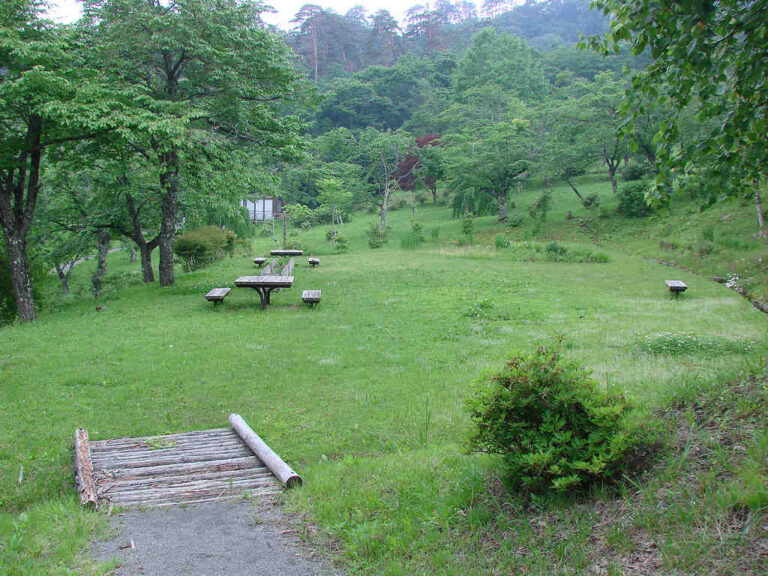
Sakuramatsu Park
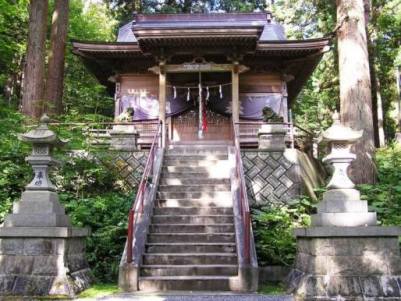
Sakuramatsu Shrine
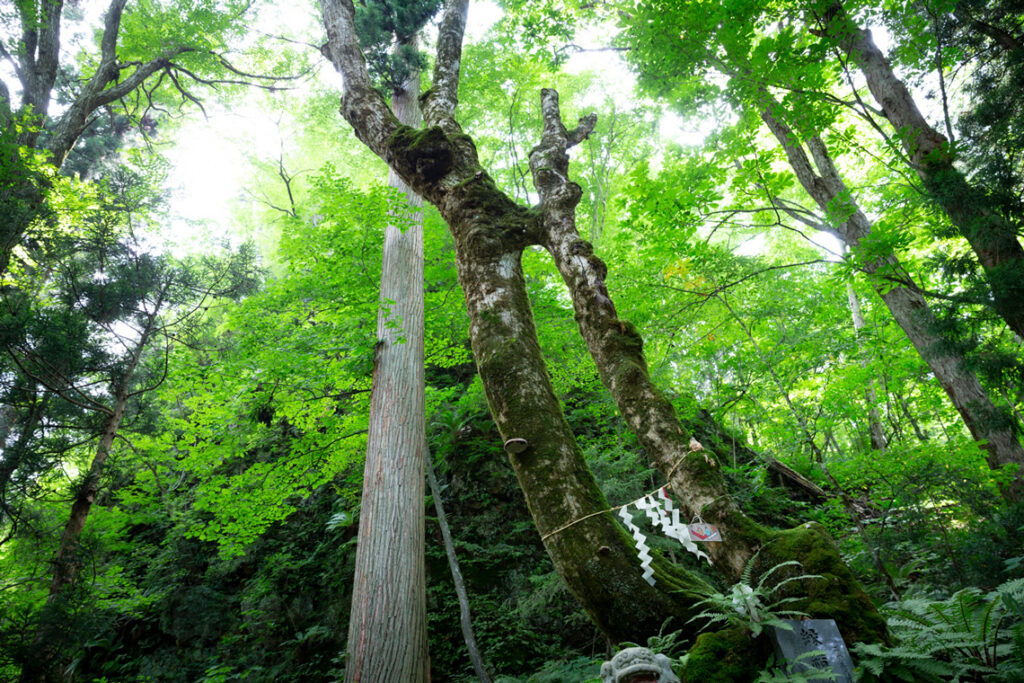
Trees are considered a source of good luck for couples
Fudo Falls
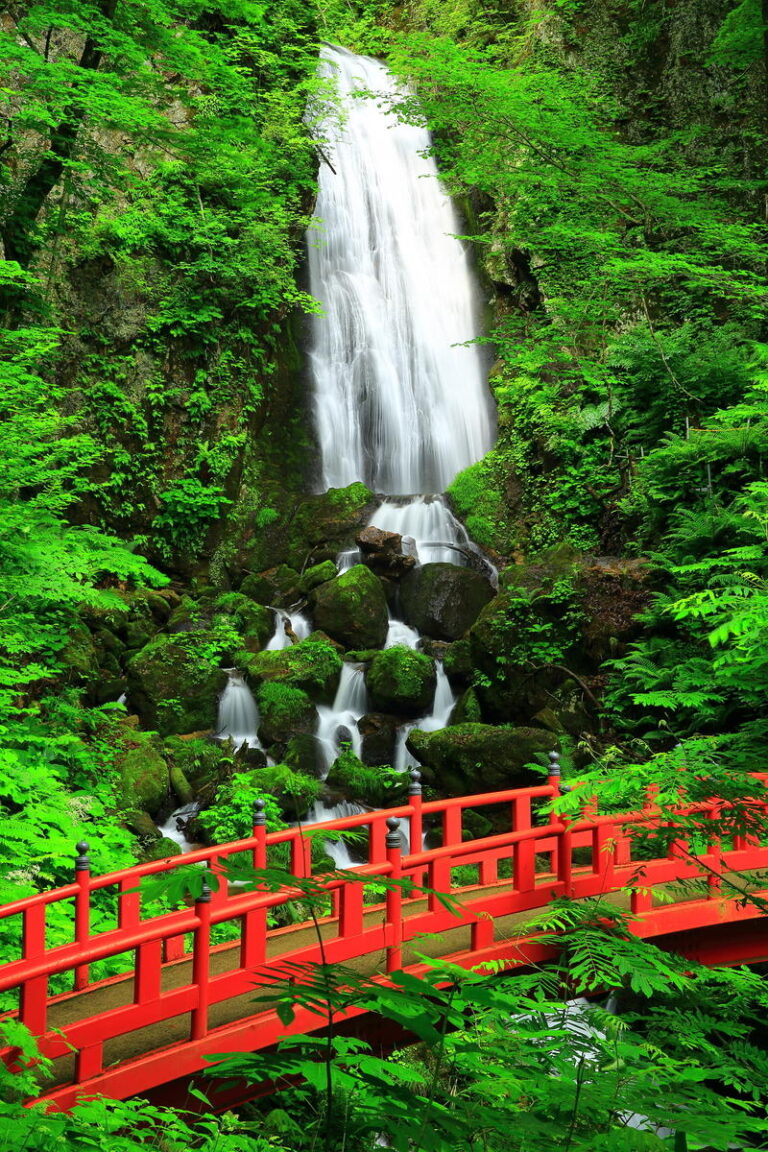
Fudo Falls
At the end of the path is Fudo Falls. This waterfall was once used as a training site for Shugendo. Shugendo is a tradition of mountain asceticism that incorporates Shinto and Buddhist teachings. Fudo is the central deity of the Five Wisdom Kings, whose fierceness transforms anger into salvation. The three-tiered waterfall falls from a height of 15 meters and is named among the top 100 scenic waterfalls in Japan. From here, the trail descends with the falls and follows a mountain stream through trees littered with ferns and moss-covered stones. The path back is dotted with shady benches that invite you to rest and picnic. A shrine festival is held every year on May 3, where visitors can watch the waterfall powerfully flow with melting snow.
According to historical legend, an elderly couple discovered cherry blossoms blooming from a pine tree in this area, and while taking a walk, they saw the beautiful figure of Princess Seoritsuhime in a stream. When they encountered the waterfall, the wife felt Seoritsu-hime's presence in the waterfall, while the husband felt her immovable presence. Such stories relating Shinto deities to Buddhist deities are not uncommon and show the fluidity of these traditions, especially when people of old interpreted them in nature.