More enjoyable trip to Hachimantai and Appi, Iwate Prefecture, Japan

Appi Highlands Grasslands and Beech Forests

Grasslands and forested areas

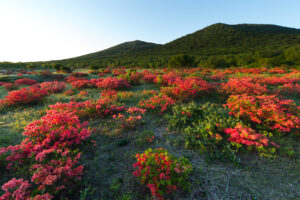
Orange Azaleas in Spring
Spring's orange azaleas
The Abiko Plateau, with its expansive grasslands and forests, welcomes visitors with easy trekking routes and beautiful scenery. Selected as one of Japan's Top 100 Forest Bathing Spots, the trail passes through magnificent beech forests, crosses highlands where horses graze and wildflowers bloom. Each spring, the grasslands burst into bloom with orange azaleas, white dogwoods, and lilies of the valley. Summer brings purple flowers from goldenrod and irises, while autumn sees further purple and blue blooms from purple loosestrife, monkshood, and lobelia.
In the adjacent forest, beech trees—descendants of those used 80 years ago for charcoal production and as bases for lacquerware—thrive. The production of that lacquerware continues today as a local traditional craft.
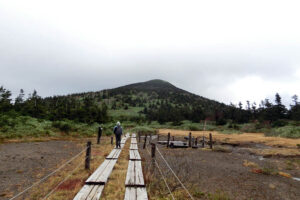
A comfortable 2-3 hour walk past ponds and waterfalls requires little equipment or experience. Appi Kogen is part of Hachimantai, where the renowned 50km trail connects Mount Iwate and the surrounding area.
This region of northern Iwate Prefecture did not always look as it does today. Over a thousand years ago, the hills of Appi were covered in forest. In 915, the aftermath of a volcanic eruption caused fires that burned much of the landscape. For centuries afterward, the recovered land was used for farming, and the grassy hills served as pasture for workhorses. During the 15th and 16th centuries, when much of Japan was in turmoil from civil war, the Kanritsu horses bred here were used on the battlefront.

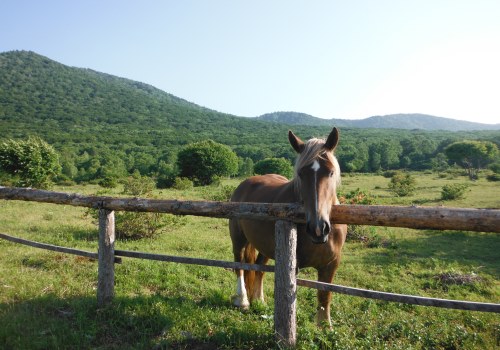
Among the horses grazing in this pastoral landscape are descendants of those that witnessed historic battles during the Warring States period. Here you'll also find the endangered Kiso horse, a small breed. After World War II, cattle were introduced to the Appi Highlands. However, cheap imports drastically reduced demand for local beef, and engine-driven agricultural machinery replaced draft horses.
When livestock grazing ceased on the hills, the vegetation began to change once more. Japanese honeysuckle, Koshikari bamboo, and other woody plants began encroaching on the grasslands. While over 80 hectares of open grassland existed in 1976, this area had decreased to nearly half—44 hectares—by 1997, just 20 years later. City authorities and the Forestry Agency began researching sustainable methods to restore the grasslands starting in 2006.
Today, with support from local businesses and volunteers, native horse breeds graze these grasslands once more. Approximately 180 hectares of land, encompassing both forested areas and open grasslands, have been developed for everyone to enjoy. One beginner-friendly course starts at the Appi Cloud Sea Gondola Station, located just below the summit of Maemoriyama (1,304 meters), and leads through Nishimoriyama (1,328 meters) to Naka-no-Bokujo. For visitors to the Hachimantai area, a rich array of nature programs has been developed to learn about local forest ecology, balanced living, and ways to enjoy the great outdoors. School field trips are also welcome.
Kiso Horse in Appi Nakano-Makiba
Kiso horses grazing in the pasture
Appi highlands of Hachimantai are part of the famous 50-kilometer trail linking this area with Mount Iwate.
Hachimantai's Appi Highlands form part of the renowned "Iwate-san, Hachimantai, Appi Highlands 50km Trail," which connects this region with Mount Iwate.
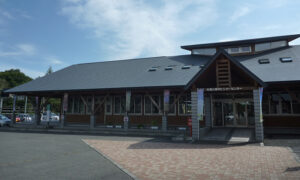
Matsuo-Visitor Center 1 Chome-2-28 Kashiwadai, Hachimantai, Iwate 028-7303 Tel: 0195 78-3500
Matsuo Hachimantai Visitor Center 1-2-28 Kashiwadai, Hachimantai City, Iwate Prefecture Phone: 0195 78-3500